
Florida Homeowner’s Hurricane Season Prep Checklist for 2026
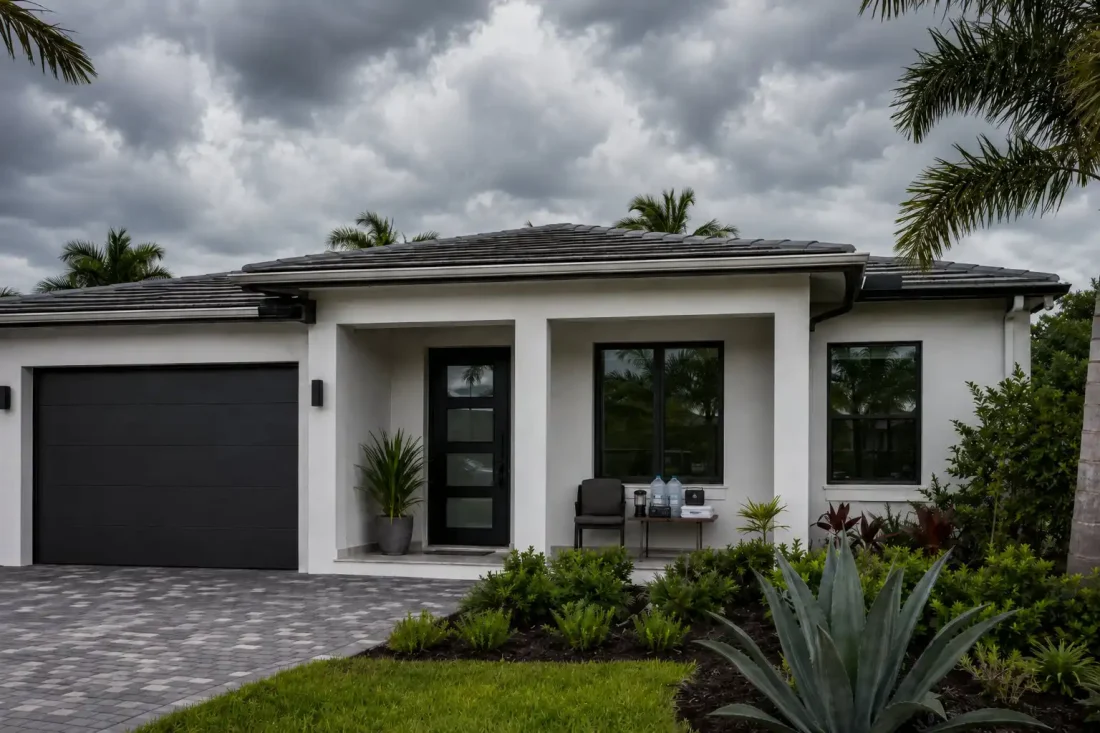
Hurricane season runs from June through November in South Florida, and the storms that matter most rarely give you more than a few days of warning. Homeowners who come through a busy season in good shape usually did the quiet work early, before a name ever showed up on the forecast cone. That is the whole idea behind a hurricane season prep checklist: turn a stressful scramble into a short list of things you have already handled.
This guide is built for a Broward or Miami-Dade household that wants a practical, do-it-this-weekend plan rather than a wall of warnings. Some of it takes an afternoon, some of it is a one-time upgrade, and all of it is easier to do in calm weather than in a crowded hardware store the day before landfall.
Work through the sections below in order. Each one covers a real decision, from knowing where you would go if an evacuation is called to checking your home for damage once the wind dies down.
Know Your Evacuation Zone Before the First Storm Forms
Your evacuation zone is the single most important thing to confirm early, because it decides whether you shelter at home or leave. Broward and Miami-Dade both publish zone maps by street address, and the zone that matters is the one tied to storm surge, not the older wind-based idea some people still repeat. Look yours up now and write it somewhere the whole household can see.
If you land in an evacuation zone, sketch out where you would go and how you would get there before a storm is ever named. A relative’s home inland, a friend outside the cone, or a public shelter are all reasonable options, but each changes what you pack and how early you should leave. Pets, medications, and anyone with mobility needs shape that plan, since shelters have specific rules and space fills quickly once an order is issued.
Keep at least half a tank of gas in every vehicle during the season. Stations run dry, and lines stretch for blocks in the 48 hours before landfall, so fuel bought early is one less thing to fight for late.
Document Your Home and Inventory for Insurance
The time to prove what your home looked like is before a storm, not after. Walk every room with your phone and take slow video of the walls, ceilings, floors, and the contents of closets and cabinets. Narrate as you go, opening drawers and reading model numbers off the larger items. This ten-minute habit becomes the backbone of any claim you file later, because it shows condition and ownership at a fixed point in time.
Repeat the process outside. Record the roof from the ground, the soffits, the screen enclosure, and both sides of every window and door. If you have receipts or warranty paperwork for recent upgrades, photograph those too and store everything in the cloud so it survives even if the house does not. Wind mitigation features are worth documenting carefully, since impact-rated openings can also earn credits on your homeowners policy.
Keep a copy of your current policy, your insurance agent’s number, and your claim hotline in that same folder. Knowing your hurricane deductible ahead of time, which in Florida is usually a percentage of the insured value rather than a flat dollar amount, keeps the first post-storm phone call from turning into a surprise.
Secure Every Opening, and Why Impact Glass Beats Plywood
Wind does most of its damage the moment it gets inside. Once a window or door fails, the pressure building under your roof lifts shingles, sheathing, and sometimes the roof structure itself. Openings, not walls, usually decide whether a storm plan is won or lost.
Plywood and metal panels still work as a last-minute defense, but they carry real costs. You have to store them, cut and label them, find help to lift them, and put them up every single time a storm threatens, which often means boarding the house in the dark ahead of a possible near miss. Accordion and roll-down shutters solve part of the labor problem, but you still have to deploy them every time a storm threatens and maintain them through years of salt air.
Impact windows and their door counterparts take that decision off your plate for good. The laminated glass is engineered to take a hit from wind-borne debris and stay in the frame even when it cracks, so the opening keeps holding pressure. Because the protection is permanent, you don’t have to install anything when a warning is issued, and the same glass quiets street noise and blocks UV year-round. Trading a garage full of panels for hurricane-rated impact windows and impact-resistant entry doors is the one item on this list you complete once and never repeat.
The Supplies-and-Property Hurricane Season Prep Checklist
With your plan, your documentation, and your openings handled, the rest of the hurricane season prep checklist comes down to the physical supplies and outdoor tasks that carry your household through a power outage. Stage these before a storm is named, because the shelves empty fast once a system enters the Gulf or the Atlantic.
- Water: one gallon per person per day for at least seven days, plus extra for pets. Fill the bathtub and spare containers once a warning is posted.
- Food and basics: a week of non-perishable food, a manual can opener, a first-aid kit, and a two-week supply of any prescriptions.
- Power and light: flashlights, fresh batteries, a battery- or crank-powered radio, and power banks charged in advance. Keep a generator at least 20 feet from the house, never indoors or in a garage.
- Trees and landscaping: trim weak or overhanging branches early in the season, since crews and dump sites are overwhelmed once a storm is close. Loose fronds and dead limbs become projectiles.
- Loose objects: decide now where the patio furniture, grill, planters, trash cans, and pool equipment will go. Anchor anything you can, and move anything you can’t anchor into the garage.
- Important documents: keep IDs, insurance policies, deeds, and medical records in a waterproof bag or scanned to the cloud, along with some cash in small bills for when card readers are down.
Print this list and run it in early June. Restocking one or two items a week beats assembling the whole kit in a single panicked trip.
After the Storm, Inspect Before You Relax
The hours right after a storm passes carry their own hazards, so do not rush outside. Wait for local officials to say it is safe, watch for downed lines, standing water, and displaced wildlife, and treat every dark intersection as a four-way stop.
When you can move around safely, do a calm walk-through with your phone in hand. Photograph any damage before you move or clean anything, because those images matter for your claim. Check the roofline, the soffits, and the area around every window and door for water intrusion, and look for cracked or dislodged glass even on openings that seem intact from a distance. A small leak that is dried out quickly causes far less trouble than the mold that follows a leak left for a week.
If the storm exposed a weak point, such as a window that flexed, a door that let water past, or panels you would rather never lift again, note it while the memory is fresh. That is the right moment to plan permanent upgrades for next season, and our team can walk your home and lay out options. Contact us to request an assessment. Every storm you meet with a calm, ready home is a season you spend worrying a lot less.